Anatomy in the ancient world
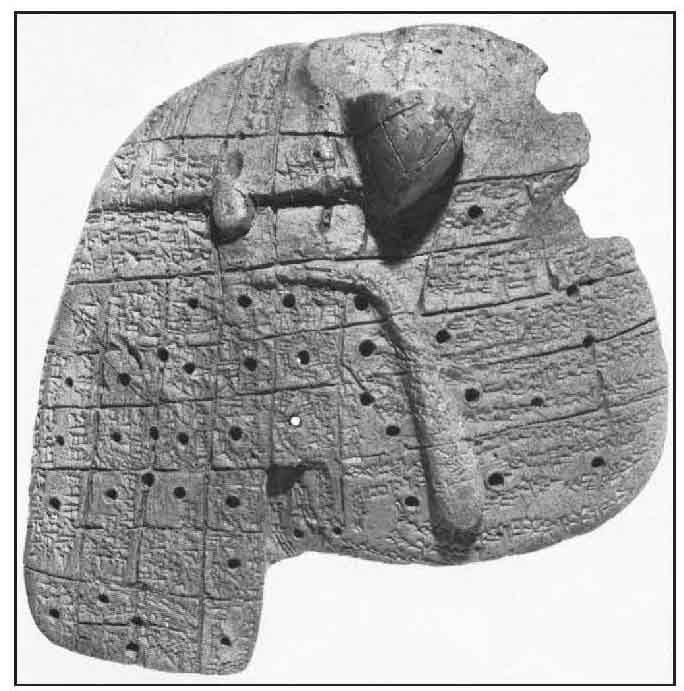
Some cuneiform writings from ancient Mesopotamia depicted and described body
organs that were thought to serve the soul. The liver, which was extensively studied in sacrificial animals, was thought to be the “guardianship of the soul and of the sentiments that make us men.” This was a logical assumption because of the size of the liver and its close association with blood, which was observed to be vital for life.
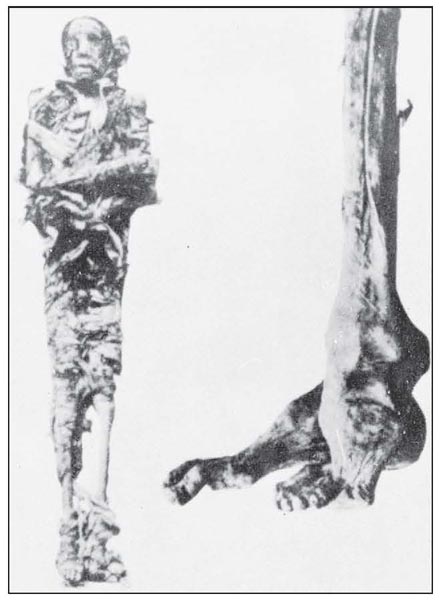
Several written works concerning anatomy have been discovered from ancient Egypt, but none of these influenced succeeding
cultures. Menes, a king-physician during the first Egyptian dynasty of about 3400 B.C. (even before the pyramids were built),
wrote what is thought to be the first manual on anatomy. Later writings (2300–1250 B.C.) attempted a systematization of the body, beginning with the head and progressing downward.
In ancient China, interest in the human body was primarily philosophical. Ideas about anatomy were based on reasoning
rather than dissection or direct observation. The Chinese
revered the body and abhorred its mutilation.
It was in ancient Greece that anatomy first gained wide acceptance as a science. Hippocrates (460–377 B.C.), the most famous of the Greek physicians of his time, is regarded as the father of medicine because of
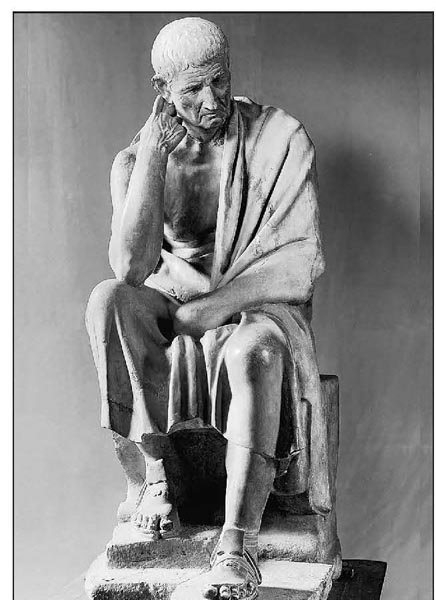
the sound principles of medical practice that his school established. Hippocrates probably had only limited exposure to human dissections, but he was well disciplined in the popular humoral theory of body organization.Aristotle made careful investigations of all kinds of animals,
which included references to humans, and he pursued a limited type of scientific method in obtaining data. He wrote the first known account of embryology, in which he described the development of the heart in a chick embryo. He named the aorta and contrasted the arteries and veins.
Claudius Galen (A.D. 130–201) was perhaps the best physician since Hippocrates. A Greek living under Roman domination, he
was certainly the most influential writer of all times on medical subjects. For nearly 1,500 years, the writings of Galen represented
the ultimate authority on anatomy and medical treatment. Galen probably dissected no more than two or three human cadavers during his career, of necessity limiting his
anatomical descriptions to nonhuman animal dissections.
The Abbasid Muslims made a profound contribution to the history of anatomy in a most unusual way. It was the Islamic
world that saved much of Western scholarship from the ruins of the Roman Empire, the oppression of the Christian Church, and the onset of the Middle Ages.Without the Islamic repository of the writings of Aristotle, Hippocrates, Galen, and
others, the progress of centuries in anatomy and medicine would have been lost. It wasn’t until the thirteenth century that the
Arabic translations were returned to Europe and, in turn, translated to Latin.
The period known as the Renaissance was characterized by a rebirth of science. It lasted roughly from the fourteenth through the sixteenth centuries and was a transitional period from the Middle Ages to the modern age of science.
The Renaissance was ushered in by the great European universities established in Bologna, Salerno, Padua, Montpellier, and Paris. The first recorded human dissections at these newly established centers of learning were the workof the surgeon William of Saliceto (1215–80) from the University of
Bologna. The study of anatomy quickly spread to other universities, and by the year 1300 human dissections had become an integral part of the medical curriculum. However, the Galenic dogma that normal human anatomy was sufficiently understood
persisted, so interest at this time centered on methods and techniques of dissection rather than on furthering knowledge of the
human body.
The major advancements in anatomy that occurred during the Renaissance were in large part due to the artistic and scientific
abilities of Leonardo da Vinci and Andreas Vesalius. Working in the fifteenth and sixteenth centuries, each produced
monumental studies of the human form.
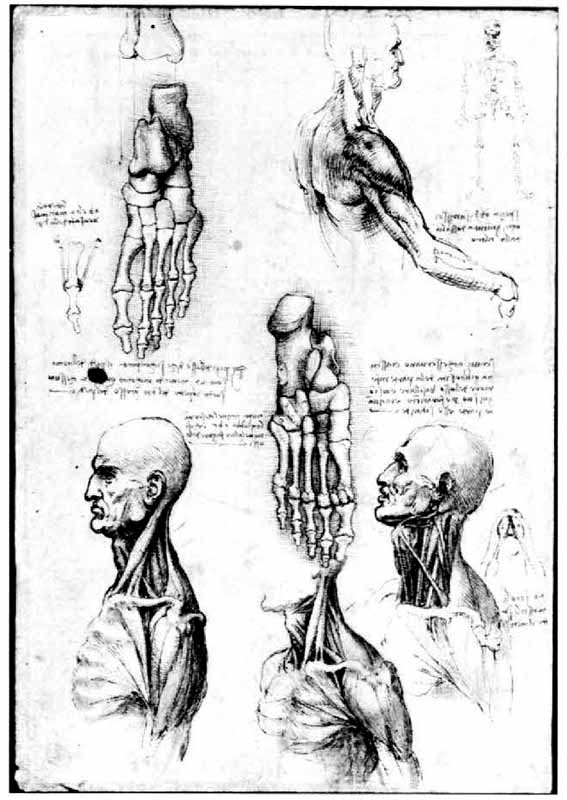
Leonardo’s illustrations helped to create a new climate of visual attentiveness to the structure of the human body. He was
intent on accuracy, and his sketches are incredibly detailed. He experimentally determined the structure of complex
body organs such as the brain and the heart. He made wax casts of the ventricles of the brain to study its structure. He constructed
models of the heart valves to demonstrate their action.
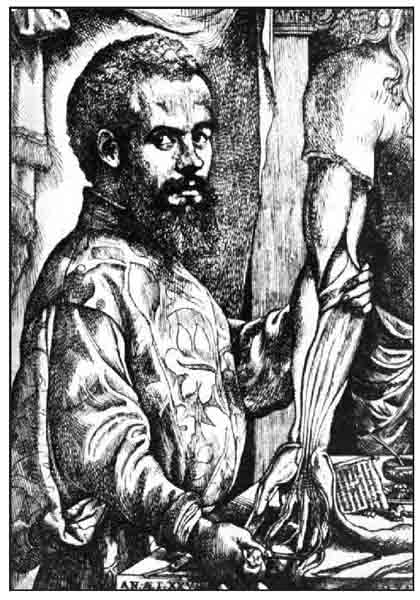
Vesalius apparently had enormous energy and ambition. By the time he was 28 years old, he had already completed the masterpiece of his life, De Humani Corporis Fabrica, in which the various
body systems and individual organs are beautifully illustrated and described. His book was especially important in that it boldly challenged hundreds of Galen’s teachings.
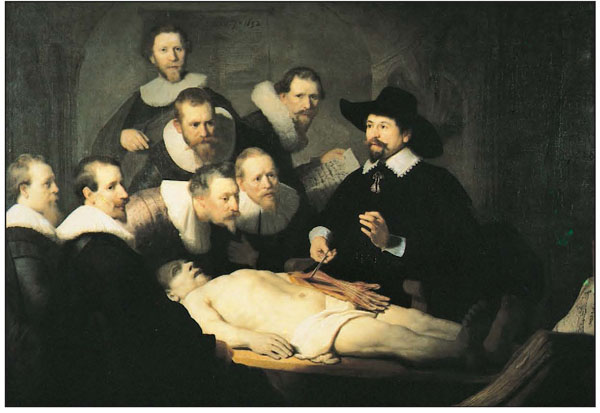
During the seventeenth and eighteenth centuries, the science of anatomy attained an unparalleled acceptance. In some of its aspects, it also took on a somewhat theatrical quality. Elaborate amphitheaters were established in various parts of Europe for
public demonstrations of human dissections.
The major scientific contribution of the nineteenth century was the formulation of the cell theory. It could be argued that this
theory was the most important breakthrough in the history of biology and medicine because all of the body’s functions were
eventually interpreted as the effects of cellular function.The term cell was coined in 1665 by an English physician, Robert Hooke.Two German scientists, Matthias Schleiden and Theodor Schwann, are credited with the biological principle referred to as the cell theory.
Contributions to the science of anatomy during the twentieth century have not been as astounding as they were when little was
known about the structure of the body. The study of anatomy grew increasingly specialized, and research became more detailed and complex. One innovation that gained momentum early in the twentieth
century was the simplification and standardization of nomenclature.
Anatomical research in the past hundred years has taken advantage of technological developments and growing understanding of sciences such as evolutionary and molecular biology to create a thorough understanding of the body's organs and structures. Disciplines such as endocrinology have explained the purpose of glands that anatomists previously could not explain; medical devices such as MRI machines and CAT scanners have enabled researchers to study the organs of living people or of dead ones. Progress today in anatomy is centered in the development, evolution, and function of anatomical features, as the macroscopic aspects of human anatomy have been largely catalogued. The subfield of non-human anatomy is particularly active as modern anatomists seek to understand basic organizing principles of anatomy through the use of advanced techniques ranging from finite element analysis to molecular biology.
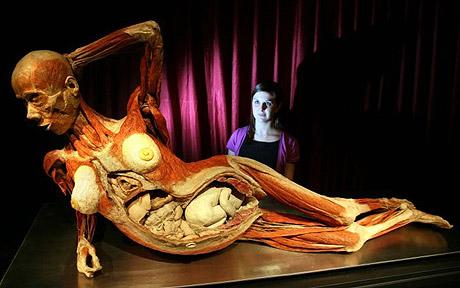
In November 1979, Gunther von Hagens applied for a German patent, proposing the idea of preserving animal and vegetable tissues permanently by synthetic resin impregnation. Since then, von Hagens has applied for further US patents regarding work on preserving biological tissues with polymers.With the success of his patents, von Hagens went on to form the Institute for Plastination in Heidelberg, Germany in 1993. The Institute of Plastination, along with von Hagens made their first showing of plastinated bodies in Japan in 1995, which drew more than three million visitors. The Institute maintains three international centres of plastination: in Germany, Kyrgyzstan and China.